
Rob Reiner's Work Touched Generations
'It’s fun to know you’ve made your way into the culture,' he told me.

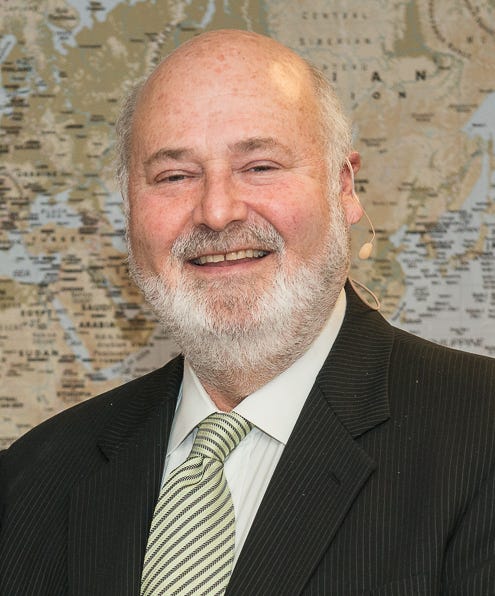
Rob Reiner’s murder hit hard this week, and not just because of the shock of a double stabbing murder along with his wife.
As director, writer and actor, Reiner was a talent that helped shape the country over the past half-century, and maybe represented a generation.
He was nurtured, like a lot of boomers, in television comedy, but in a most direct way, watching the work of his father Carl Reiner in making “The Dick Van Dyke Show.” Young Reiner also appeared in a wide variety of comedies in bit parts before he became something of the embodiment of principled youth, battling the bigotry of the establishment in the form of Archie Bunker over nine seasons, through portraying a shaggy-haired son in law forever called Meathead.
All this before creating a body of films that included a a handful of titles that are among the most beloved in American films, from “This is Spinal Tap” — his directorial debut — and “Stand By Me” to “When Harry Met Sally,” “Misery,” “The Princess Bride” and “A Few Good Men.”
That he remained a committed activist gave him purpose beyond filmmaking. And he was such a nice guy he had a way to put people instantly at ease — probably because everybody might have felt they knew him already.
That was my reaction when I interviewed him eleven years ago for The Washington Post. Though the film he was in town to promote wasn’t one of his greatest, “And So It Goes,” I couldn’t help but marvel that just about everybody on the street I passed that day must have been touched by at least one Rob Reiner film and could probably quote from it.
Plus, they’re the films that become just as important for subsequent generations. The original “Spinal Tap” was practically memorized by fans and became a comic touchstone for musicians. I was just watching “Spinal Tap II: The End Continues” his very long awaited sequel Sunday night, which had just come to HBO over the weekend when the shocking news of his death came out.
Families have handed down their love for “The Princess Bride” down through generations as well. And it wasn’t lost on Reiner.
“It was really thrilling to see people who were 7, 8 years old when they first saw it, and now they’re older and they have kids that age and they’re introducing their kids to the movie,” he told me. “That was a big kick to me. It’s fun to know you’ve made your way into the culture.”
Reiner’s work in the “Spinal Tap” movies shows that, by playing director Marty DiBergi, he was as important as the comic actors playing the band — Christopher Guest, Harry Shearer and Michael McKean — in improvising and delivering its delightful absurdity.
He’s also put in roles in any number of films or series over the years, most recently in the third season of “The Bear” as a restaurant consultant.
“I like acting,” Reiner said. But generally, “it’s not as challenging for me as directing, so I would rather do that.”
He served double duty — directing as well as playing a role as an accompanist to Diane Keaton’s character in “So It Goes,” a romantic comedy that somewhat followed the formula of previous romantic comedies like “The Sure Thing” and “When Harry Met Sally.”
“It’s like variations of a theme — the Goldberg Variations,” Reiner said.
“It’s my view of men and women,” he said. “And no matter what age they get to, in my mind, men and women [remain] the same.”
Women are more emotionally developed and “are more evolved as people,” Reiner says. “They know what they want in life, and they know what’s important. They have good priorities.”
Men, he goes on, “run around like idiots until they find someone who can make them see what’s important and then they say, ‘Oh, I see.’”
“And basically, that’s the same story I’ve told over and over,” Reiner said. “I say it in different ways. But it’s this wonderful dance we do, no matter what age we are.”
Reiner’s nearly two dozen films have won him Oscar nominations, four Golden Globes and a star on the Hollywood Walk of Fame. But he’d be still be widely beloved if only from his days playing Michael Stivic, the proudly woke son-in-law of the Bunkers.
“Basically I was espousing my views,” he said regarding his role in Norman Lear’s classic sitcom. “If anything, Mike was a little more liberal than I am. But it was essentially my point of view, and I was allowed to express it.”
Then as now, the country was deeply divided. And Reiner’s murder Sunday sparked a quick and outrageously callous missive from the president.
But that’s only because Reiner has been proven such a strong advocate for progressive causes. At the time we spoke he was still celebrating the overturn of Proposition 8 in California, allowing gays and lesbians to marry. “Now we’re in the throes of another lawsuit that we filed in Virginia, which is now making its way through the Fourth circuit to the Supreme Court, using the same two lawyers that were in the Prop 8 case,” he said.
From all of his advocacy work, Reiner said he did consider running for office himself over the years.
But he said when he brought it up to his family, “My wife and three kids, discussed it, and basically I polled 40 percent of my family. So I figured if I can’t carry my family, it’s not a good move on my part.”